Field Note 01 · Burgenland
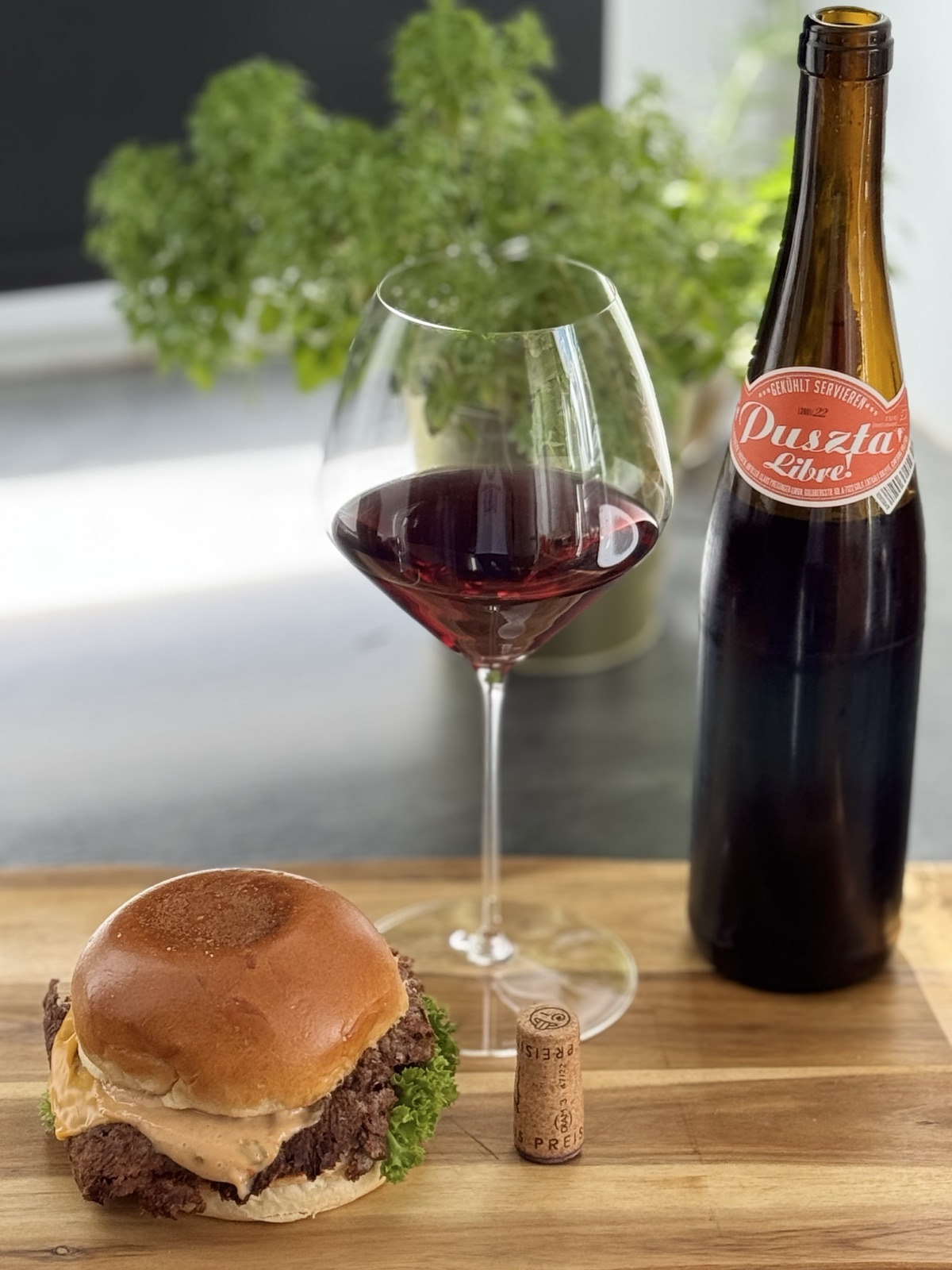
Preisinger Puszta Libre 2022
Riedel Veloce Pinot Noir, paired with a smashburger. Chilled Blaufränkisch — the wide bowl pulls the cool fruit out, the acid cuts the bun fat. Bowl-shape over grape variety.
Doctrine in the wild. Real glasses, real bottles, real pairings.
Riedel Veloce Pinot Noir, paired with a smashburger. Chilled Blaufränkisch — the wide bowl pulls the cool fruit out, the acid cuts the bun fat. Bowl-shape over grape variety.
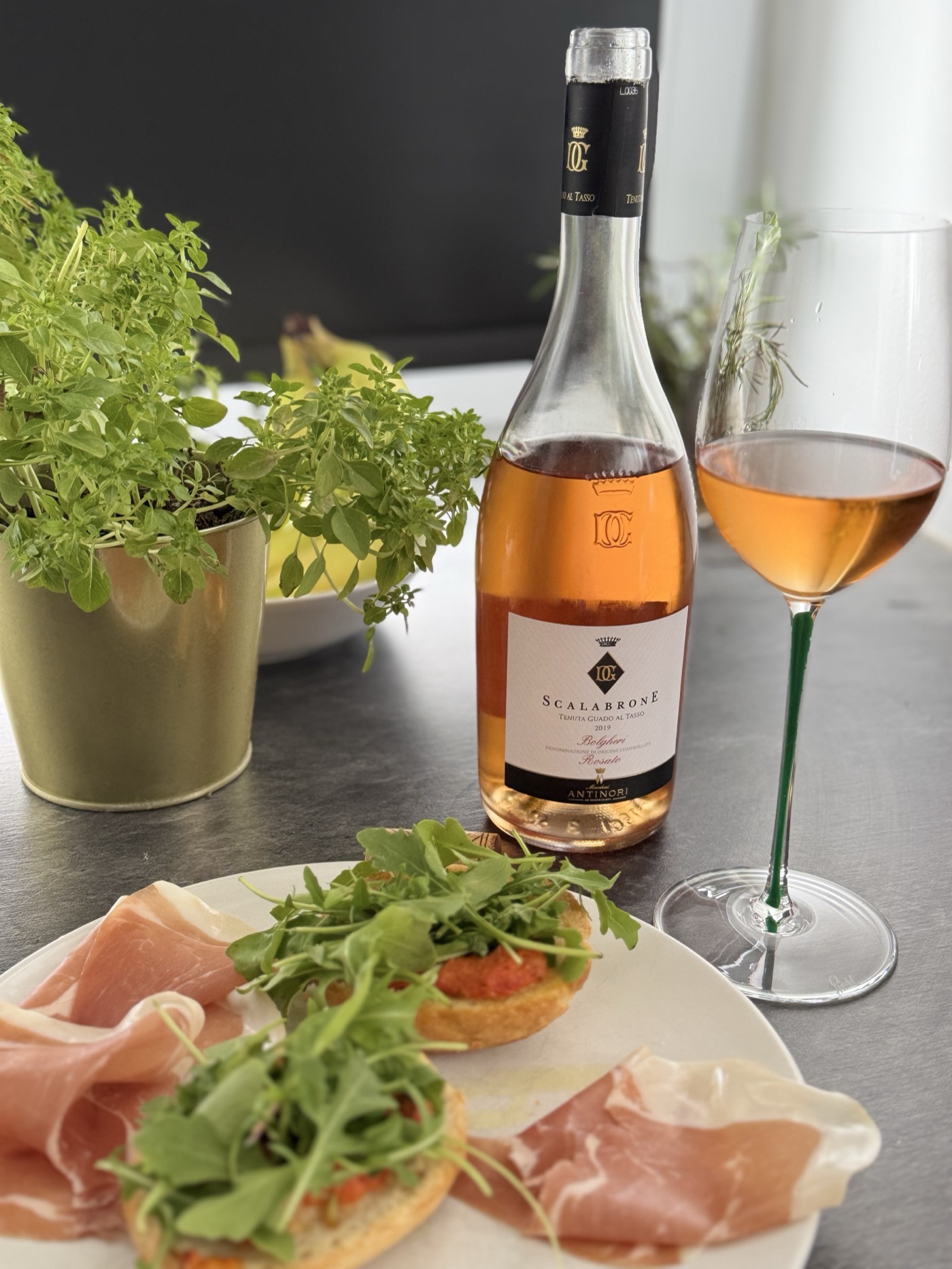
Antinori “Scalabrone” Bolgheri Rosato 2019, paired with prosciutto and rocket bruschetta. Riedel Fatto a Mano Riesling — Murano glass style stem, technically a Riesling bowl. Doctrine says go Rosé-shape; reality says the Fatto a Mano was the closest open stem, and the strawberry-citrus still got air.
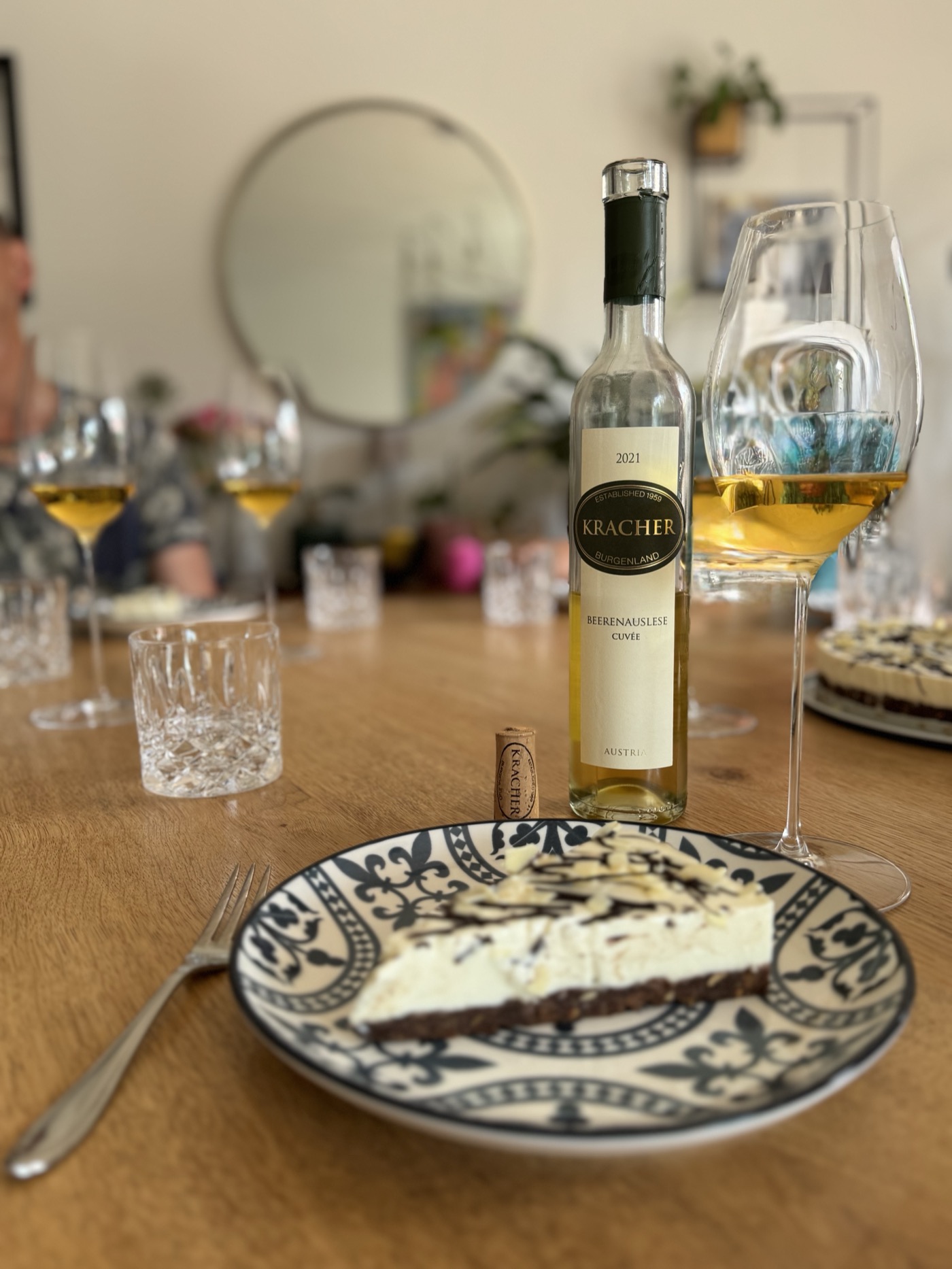
Kracher Beerenauslese Cuvée 2021, Burgenland. Paired with a chocolate-streaked cheesecake bar. Riedel Superleggero Sauvignon Blanc — not the dessert-wine playbook, but the Superleggero’s thin walls and precise bowl let the botrytis honey and apricot bloom without flattening the acid. Field over textbook.
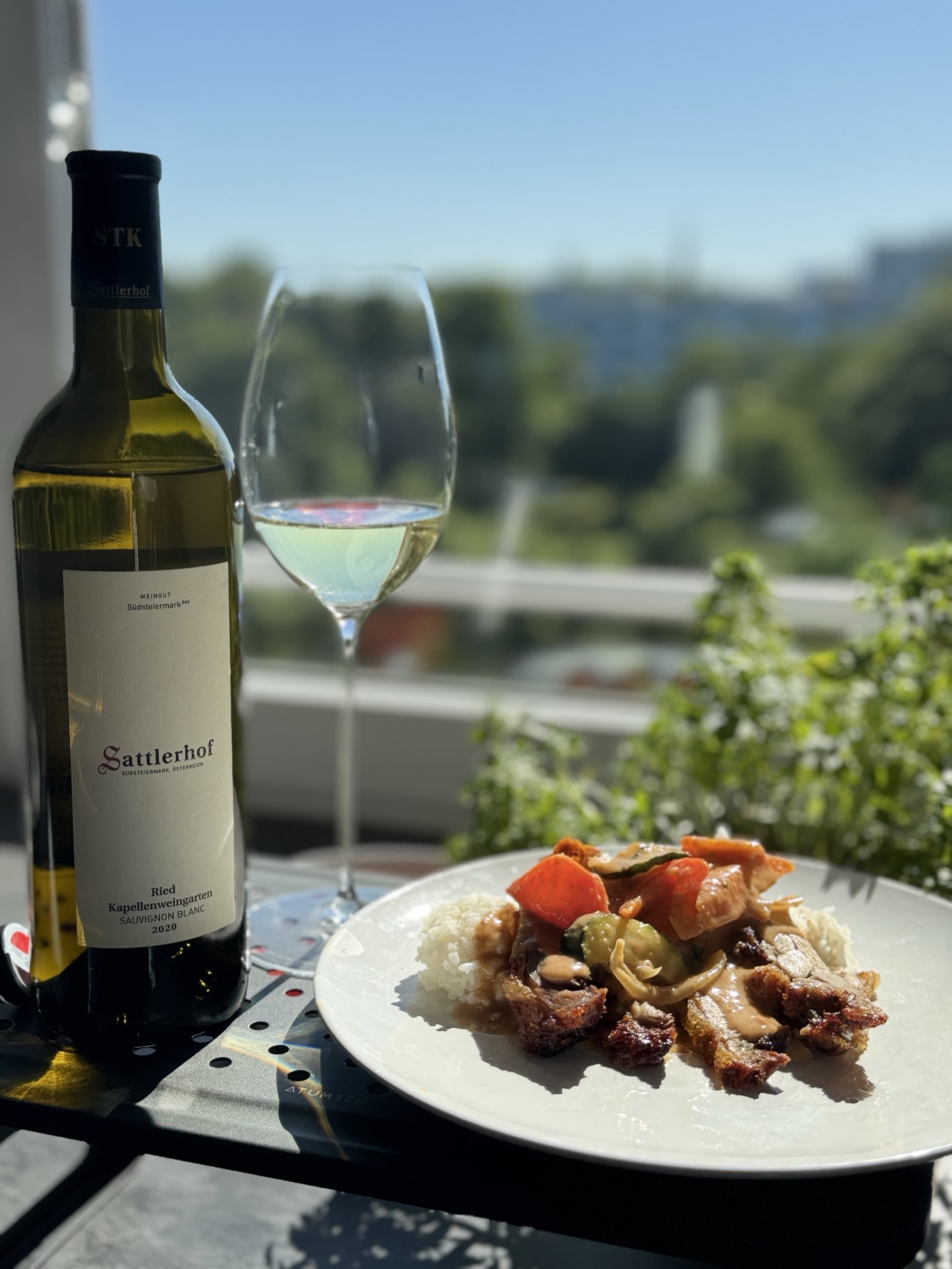
Sattlerhof Ried Kapellenweingarten Sauvignon Blanc 2020 with crispy pork, Thai vegetables and rice, balcony view. Riedel Sauvignon Blanc. The bowl holds the gooseberry, the Steiermark holds the chili.
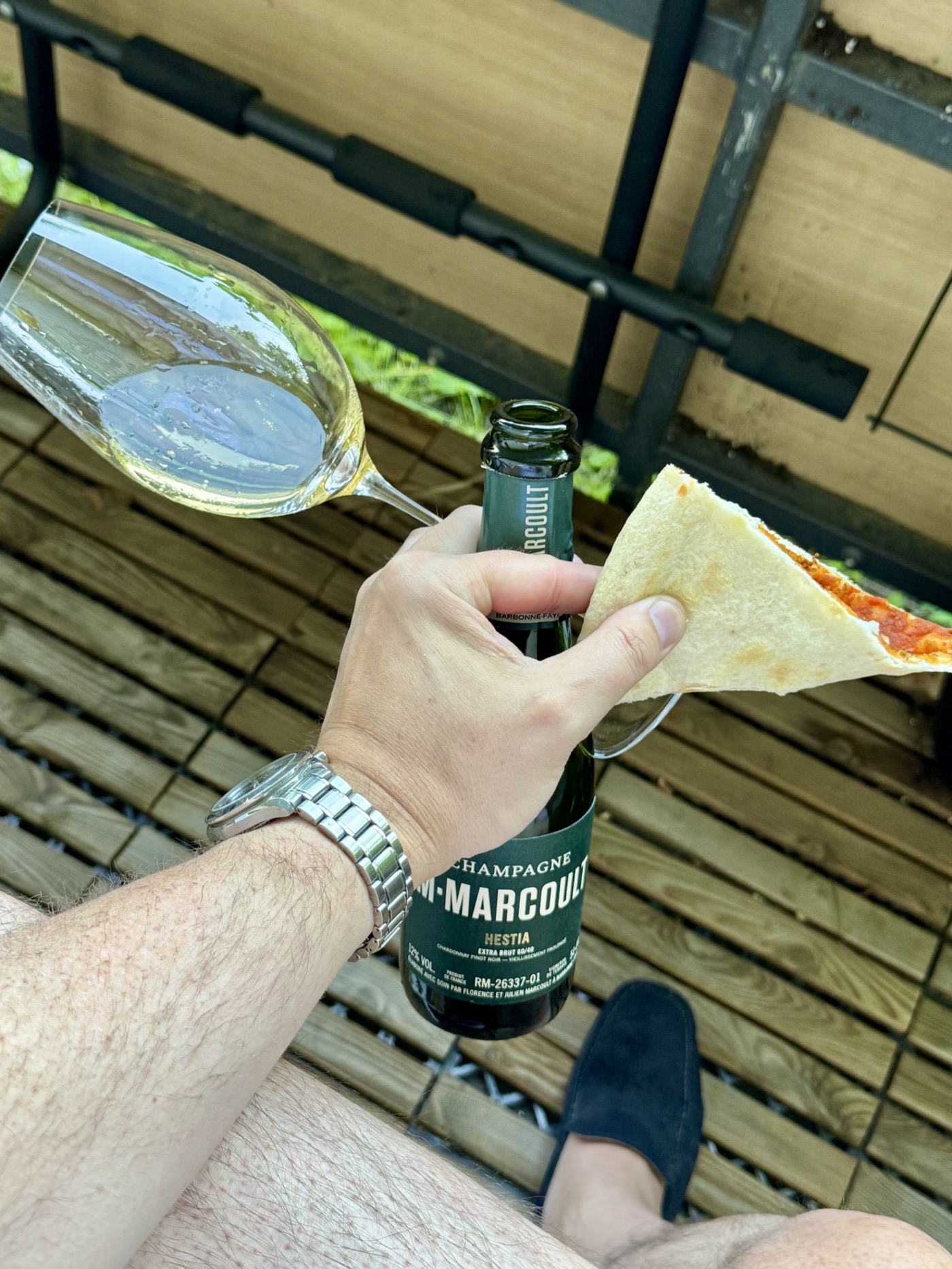
Champagne Marcoult “Hestia” Extra Brut (a 375 mL split), Riedel Champagne bowl beside the bottle. Pizza on the terrace. Even the casual moment refuses the flute.
#saynotoflutes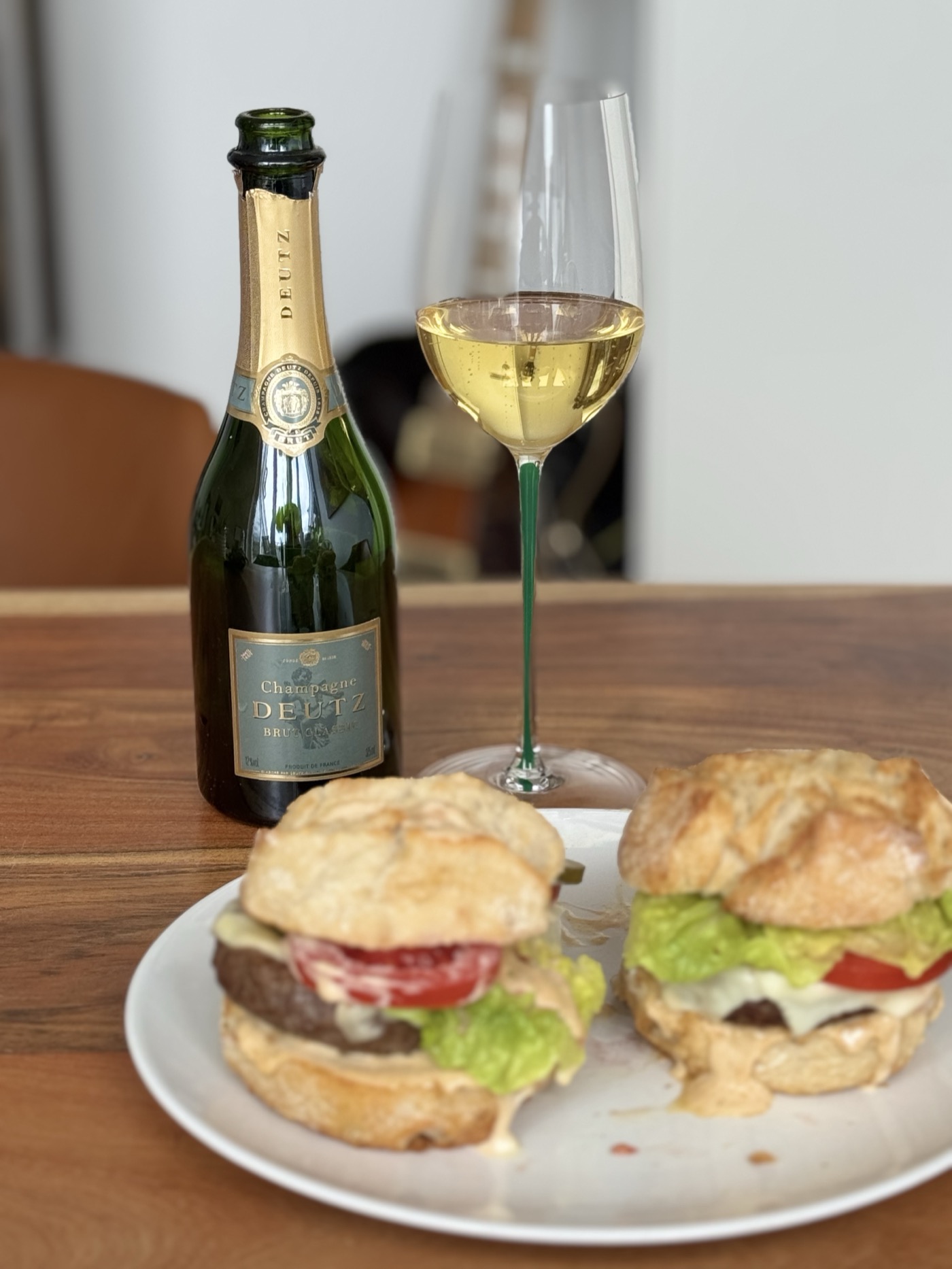
Champagne Deutz Brut Classic (375 mL half-bottle) in a Riedel Fatto a Mano Riesling — Murano glass style stem. Two homemade burgers on the side. Doctrine prefers a wider Champagne bowl, but the Fatto a Mano was on the table and the brioche aromatics still showed. A flute would have locked it all down.
#saynotoflutes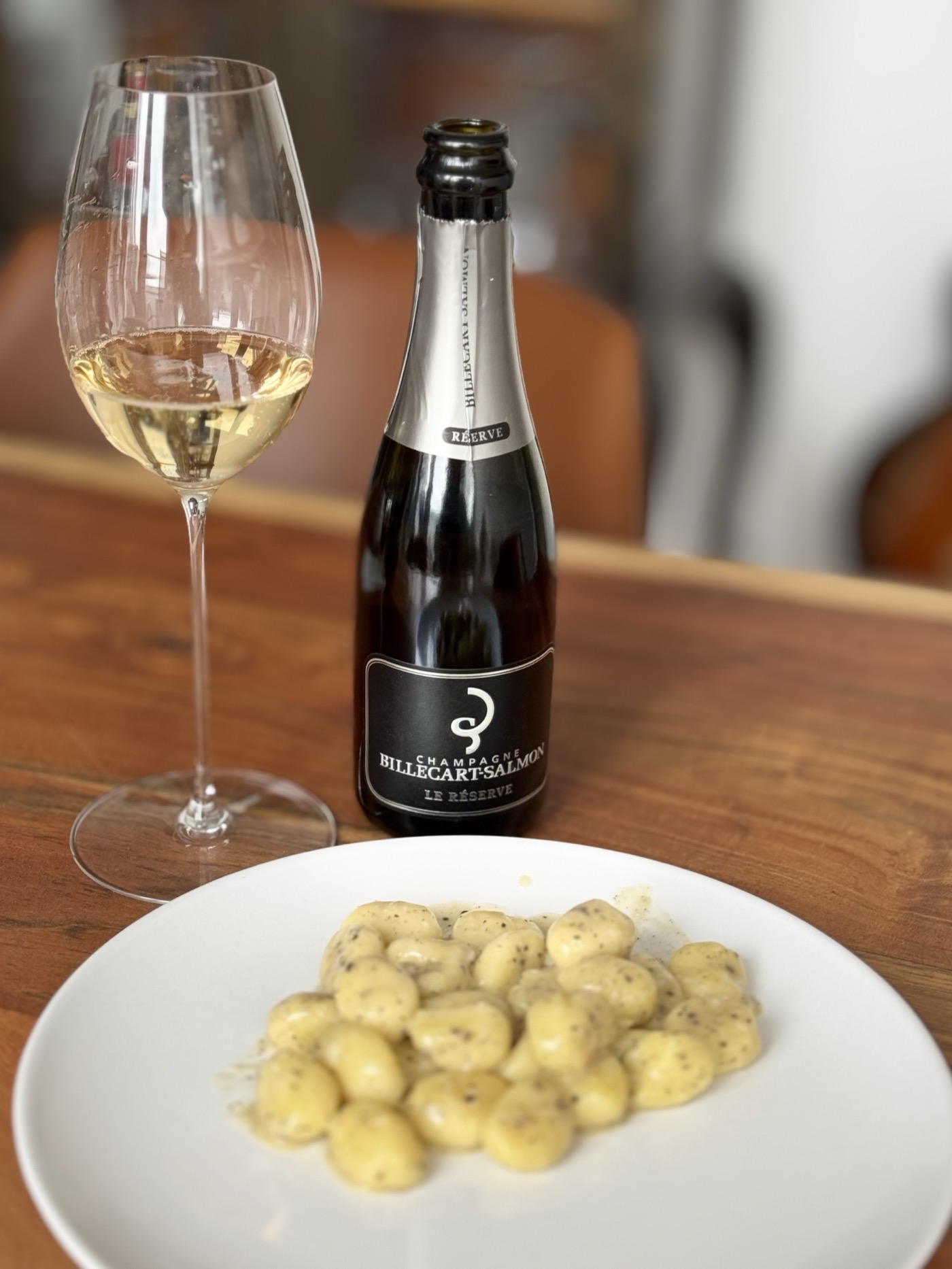
Billecart-Salmon Brut Réserve (375 mL) with gnocchi in sage butter. Riedel Superleggero Sauvignon Blanc — not the Champagne playbook, but the closest open stem and the brioche-citrus still expressed cleanly. A flute on a pasta night? Never.
#saynotoflutes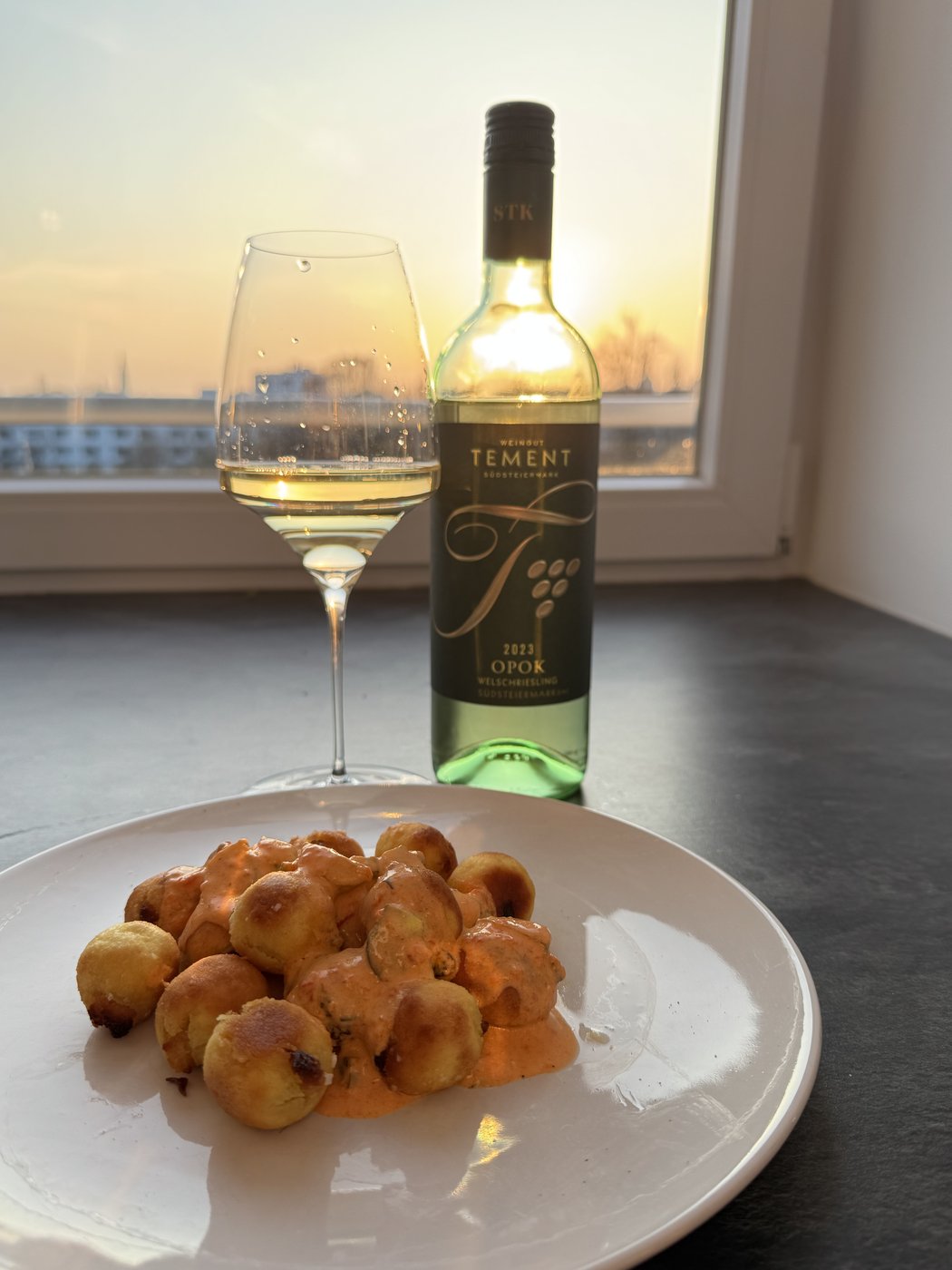
Tement Ried Opok Welschriesling 2023 at sunset with savoury Krapfen. The Manufaktur Vitis Riesling — Austrian hand-blown, tall and narrow — keeps the brisk acidity tight and the apple-meadow nose intact. Field over textbook: we don’t always reach for the Riedel.
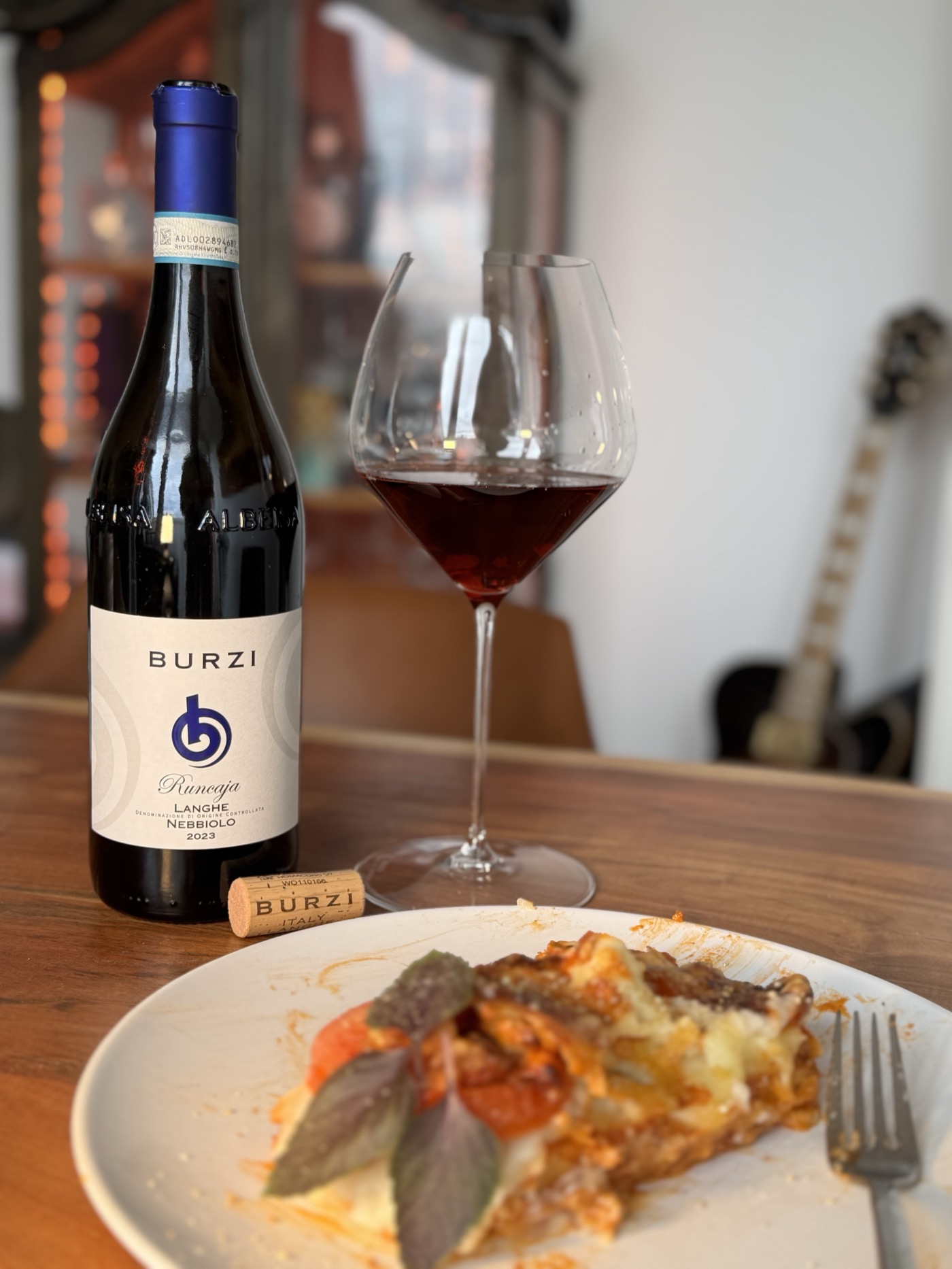
Burzi “Ruucaja” Langhe Nebbiolo 2022 in a Pinot Noir / Burgundy bowl — the correct call for Nebbiolo, despite Riedel selling a separate Barolo glass. Lasagne with sage closes the case.
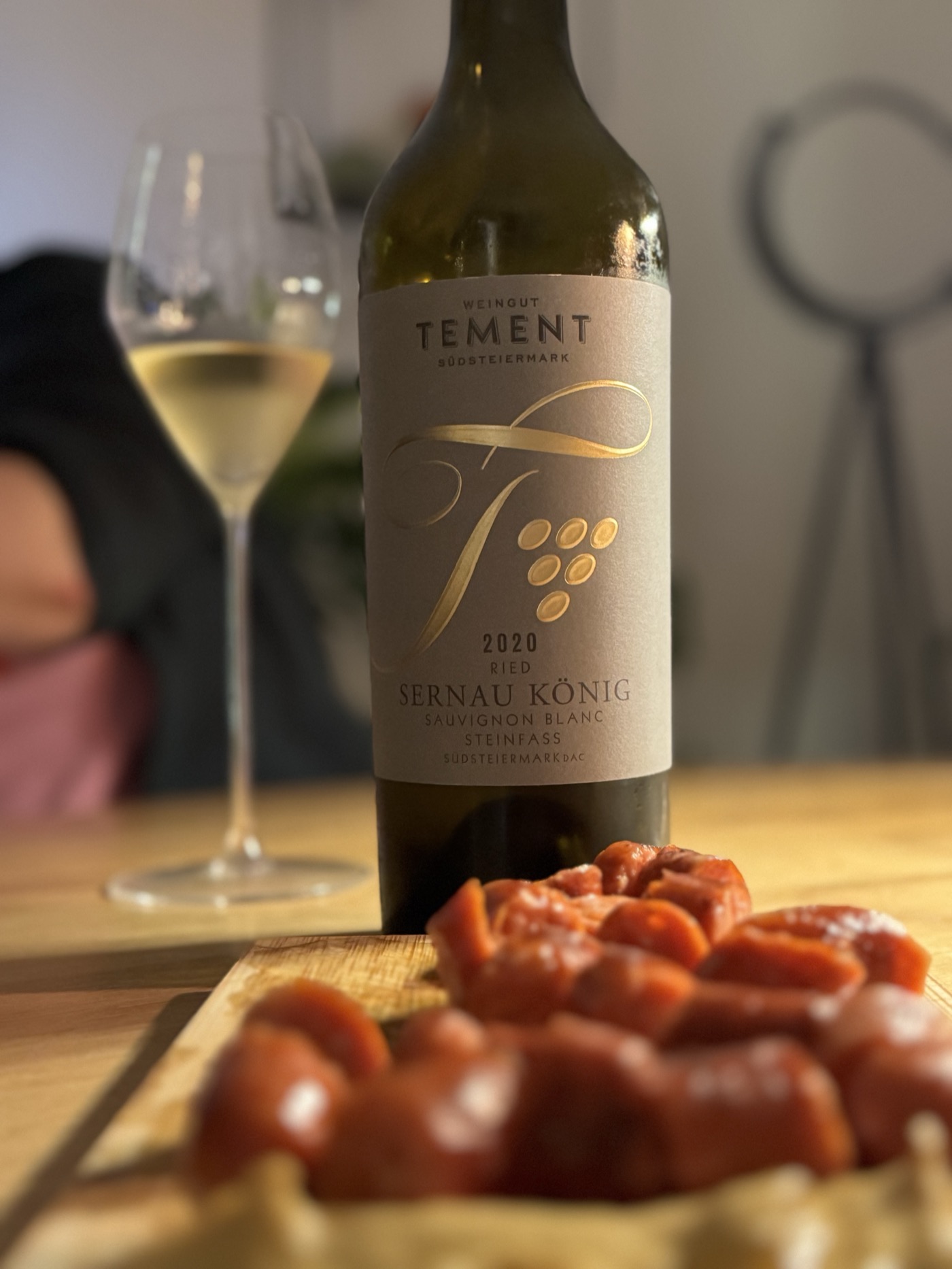
Tement Ried Sernau König Sauvignon Blanc Steinfass 2020 with Käsekrainer (Austrian smoked sausage with molten cheese pockets) on a wooden board. Riedel Sauvignon Blanc. Stone-aged Sauvignon doesn’t need fanfare — just the right bowl and a savoury anchor.
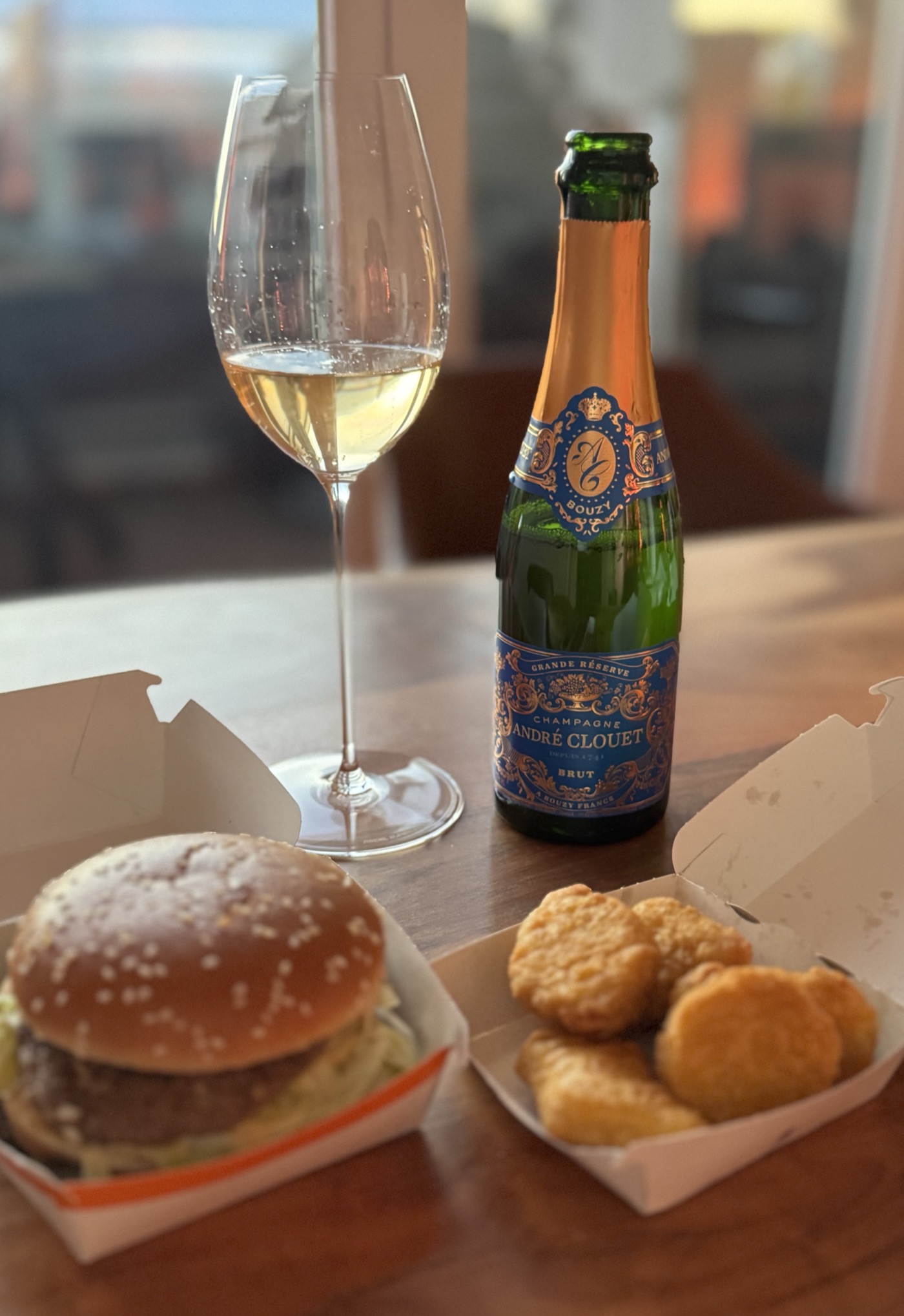
André Clouet Grande Réserve Bouzy (375 mL) with a Big Mac and a sleeve of nuggets. Riedel Champagne. The wine doesn’t judge the plate — it does judge the glass. Bowl, not flute.
#saynotoflutes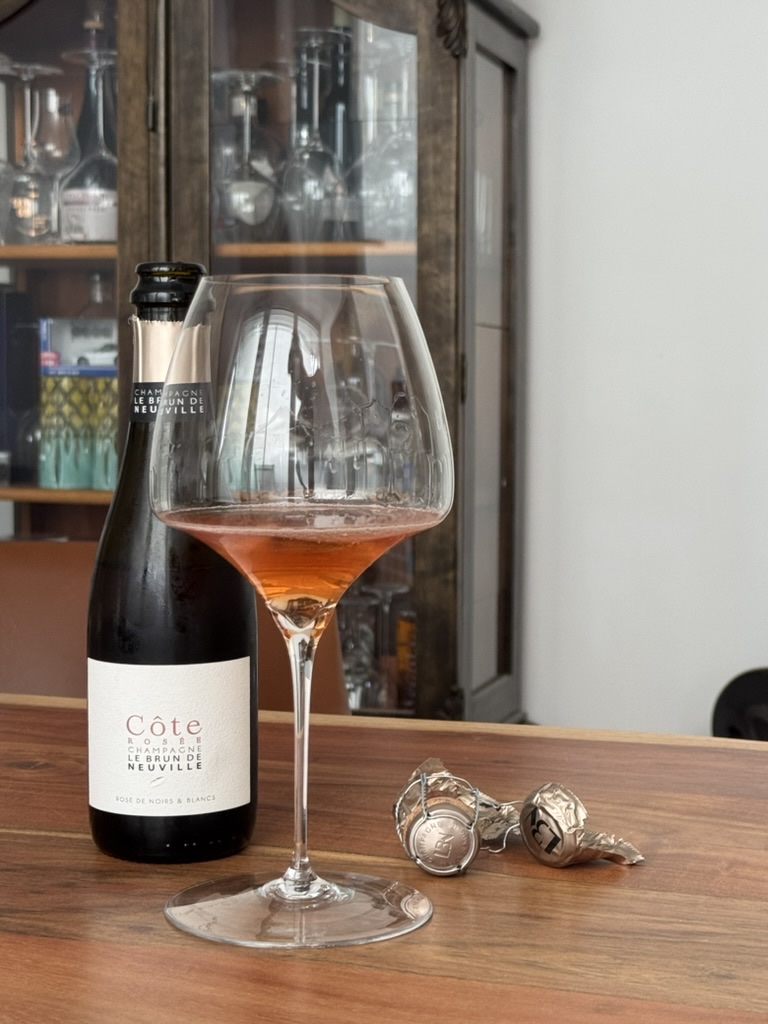
Le Brun de Neuville “Côte Rosé” (Rosé de Noirs & Blancs) in a Riedel Pinot Noir / Burgundy bowl. A hybrid style needs a hybrid glass — the big Burgundy dome gives the Pinot Noir berry room to bloom while the wide surface still carries the Chardonnay acid line. Bowl-shape over the flute, every time.
#saynotoflutes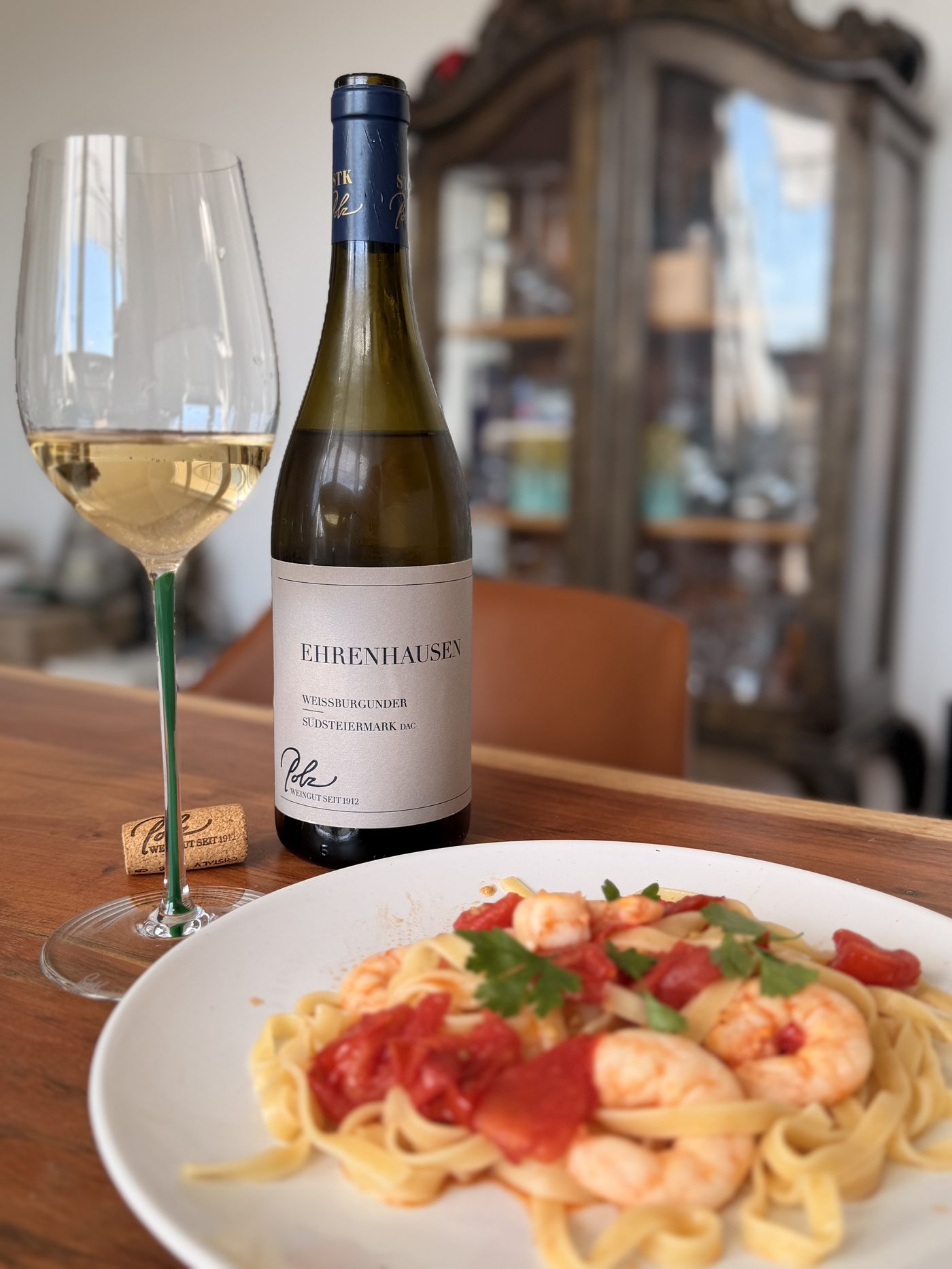
Polz Ried Ehrenhausen Weissburgunder 2024 with prawns, tomato and tagliatelle. The community voted for the Riedel Fatto a Mano — coral-limestone soil, aged in large used oak, quietly nutty and only 12% alc. The bowl kept the peach and Piedmont hazelnut sitting above the garlic instead of getting crushed by it. Doctrine by show of hands, once in a while.
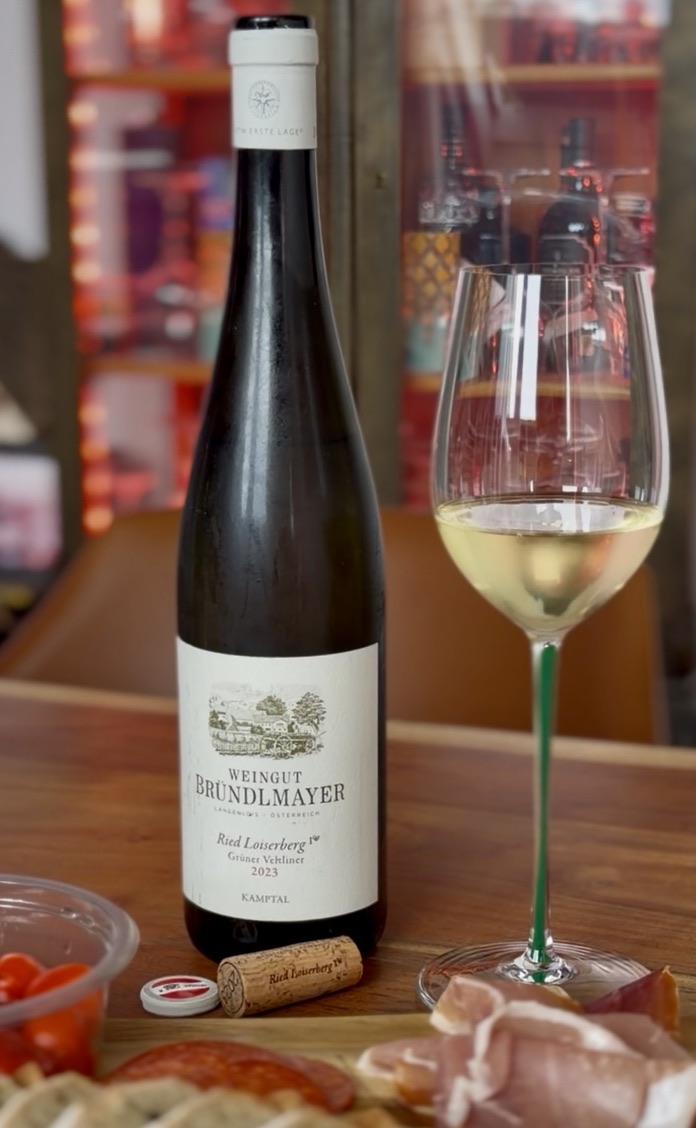
Bründlmayer Ried Loiserberg 1ÖTW Grüner Veltliner 2023 in a Riedel Fatto a Mano Riesling — Murano glass style green stem. Prosciutto, chorizo, cherry tomatoes on the board. Loess-and-gneiss Erste Lage, the classic white pepper and Kamptal grip: the tall Riesling bowl channels the peppery topnotes and keeps the salt-cured aromatics honest.
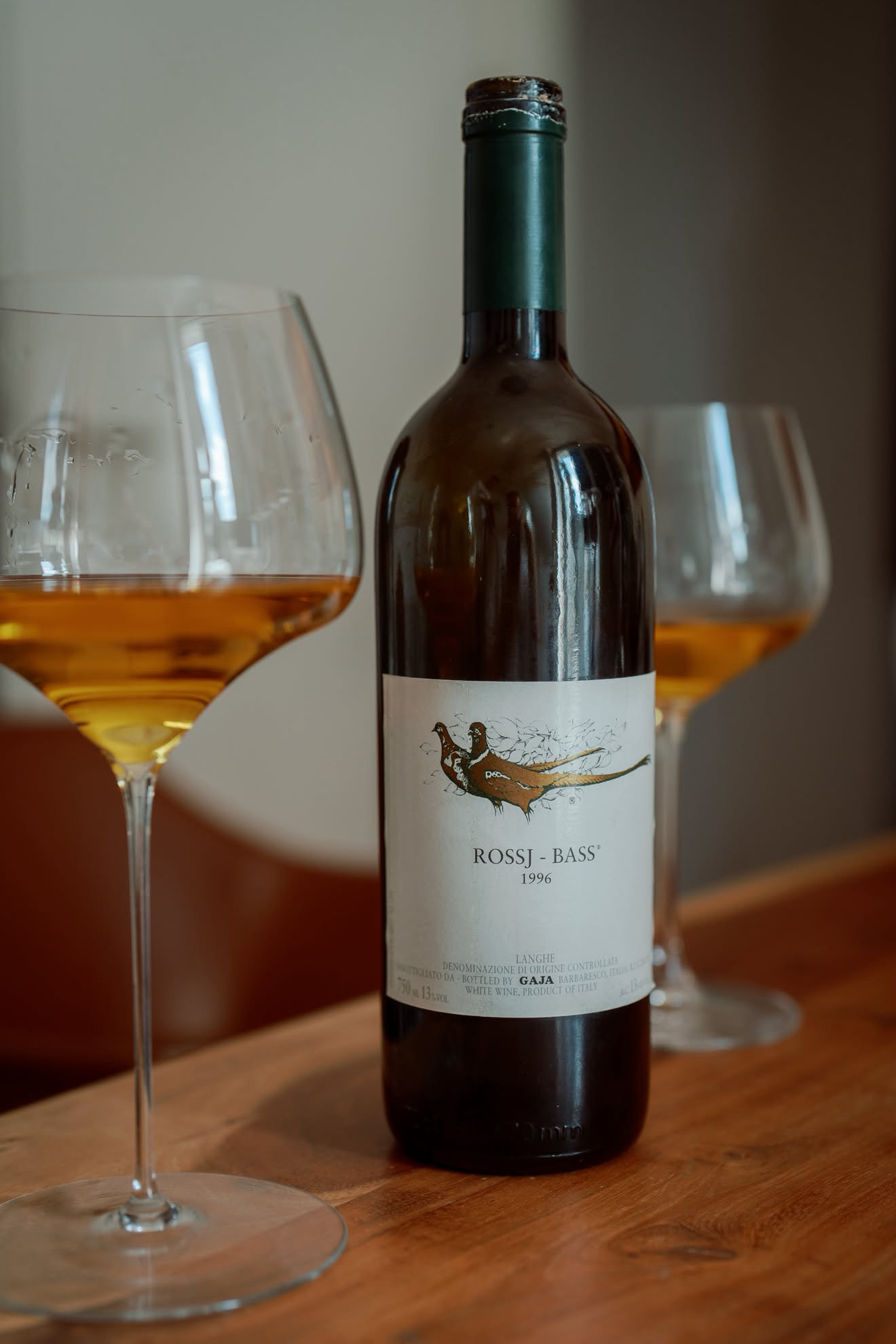
Gaja “Rossj-Bass” 1996 Langhe — Chardonnay from Barbaresco, opened at 29 years. Two Manufaktur Vitis Chardonnay bowls — Austrian hand-blown, wide and open — because an aged white needs surface, not a chimney. The colour walked in as deep amber; the nose said the wine hadn’t. Doctrine says a big bowl for old Chardonnay; reality agreed for once.
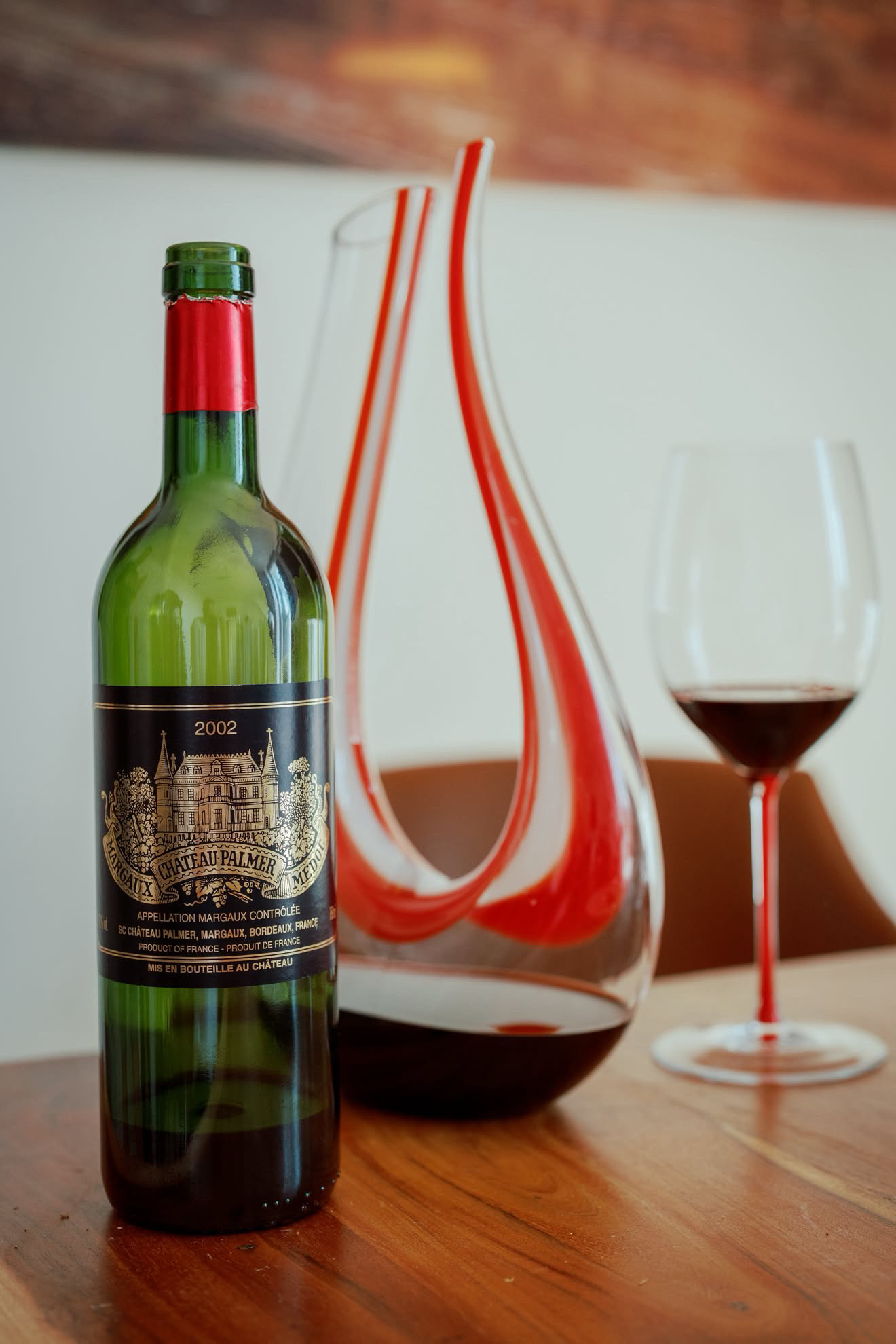
Château Palmer 2002, Appellation Margaux Contrôlée. Decanter first: the Riedel Amadeo Fatto a Mano — the red-ribbon icon, hand-blown, the S-curve doing the work — then a Fatto a Mano Bordeaux, red stem. Twenty-three years in, the wine wants air before it wants an audience. The decanter is not decoration; it is the first glass.
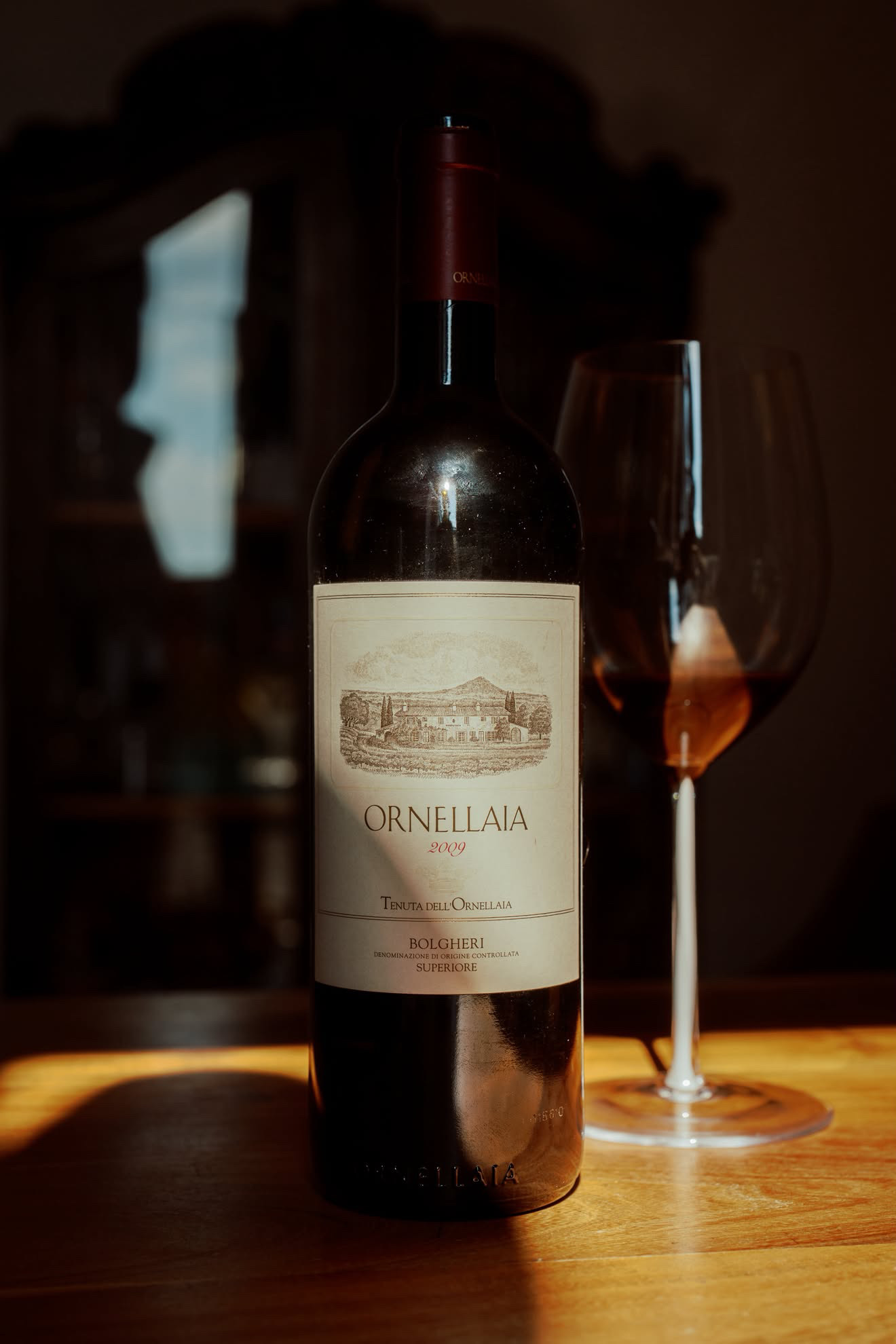
Tenuta dell’Ornellaia 2009 Bolgheri Superiore in a Riedel Fatto a Mano Bordeaux — white stem — one band of late sun across the table. A Super Tuscan built Cabernet-first belongs in the glass built for Cabernet — the tall bowl aims the tannin past the tongue and lets the sixteen-year-old cedar and graphite come up. Bowl-shape follows the grape, not the postcode.
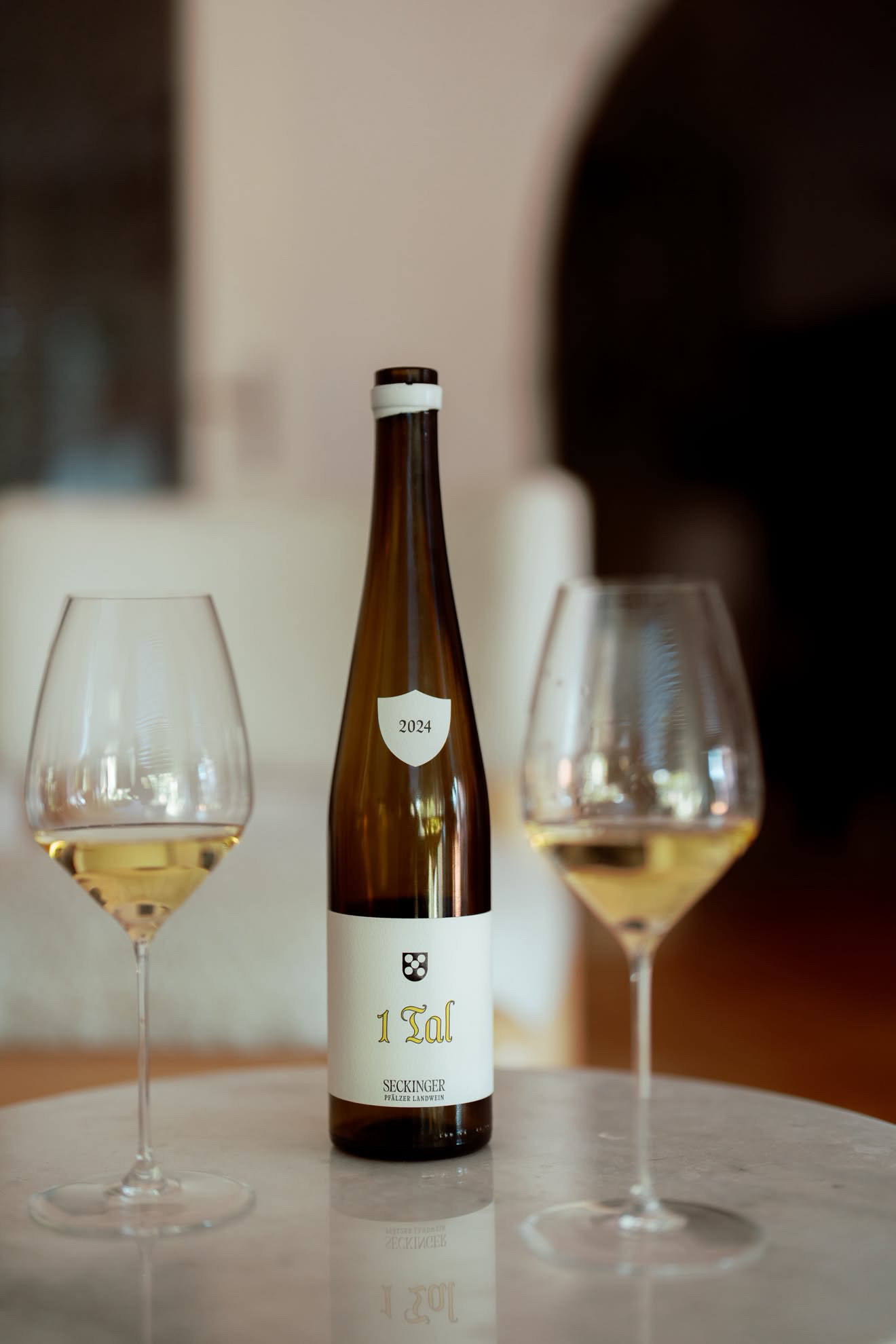
Seckinger “1 Tal” 2024, Pfälzer Landwein — Riesling from the Deidesheim natural-wine camp, low-intervention, and labelled at the bottom of the pyramid on purpose. Two Riedel Veloce Riesling anyway: the tall, narrow shape keeps the slate-and-orchard line vertical and the ferment funk in check. The tier on the label decides nothing; the grape decides the glass.
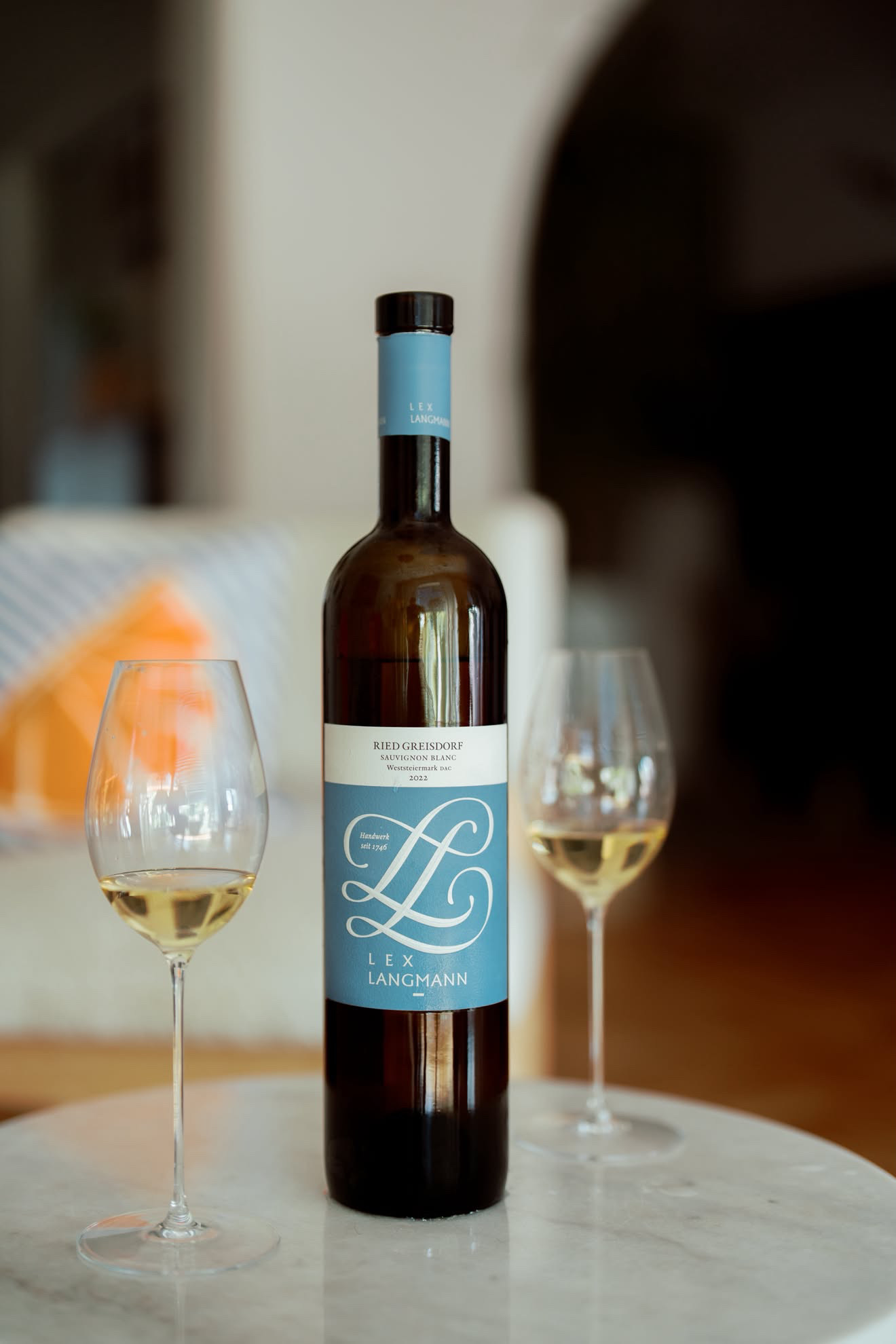
Lex Langmann Ried Greisdorf Sauvignon Blanc, Weststeiermark DAC 2022 — a single vineyard from the district everyone files under Schilcher. Two Riedel Superleggero Sauvignon Blanc, no debate: thin-walled, and the narrow taper holds the nettle and gooseberry together instead of letting them scatter. The bowl holds the Sauvignon, the Weststeiermark holds the nerve.
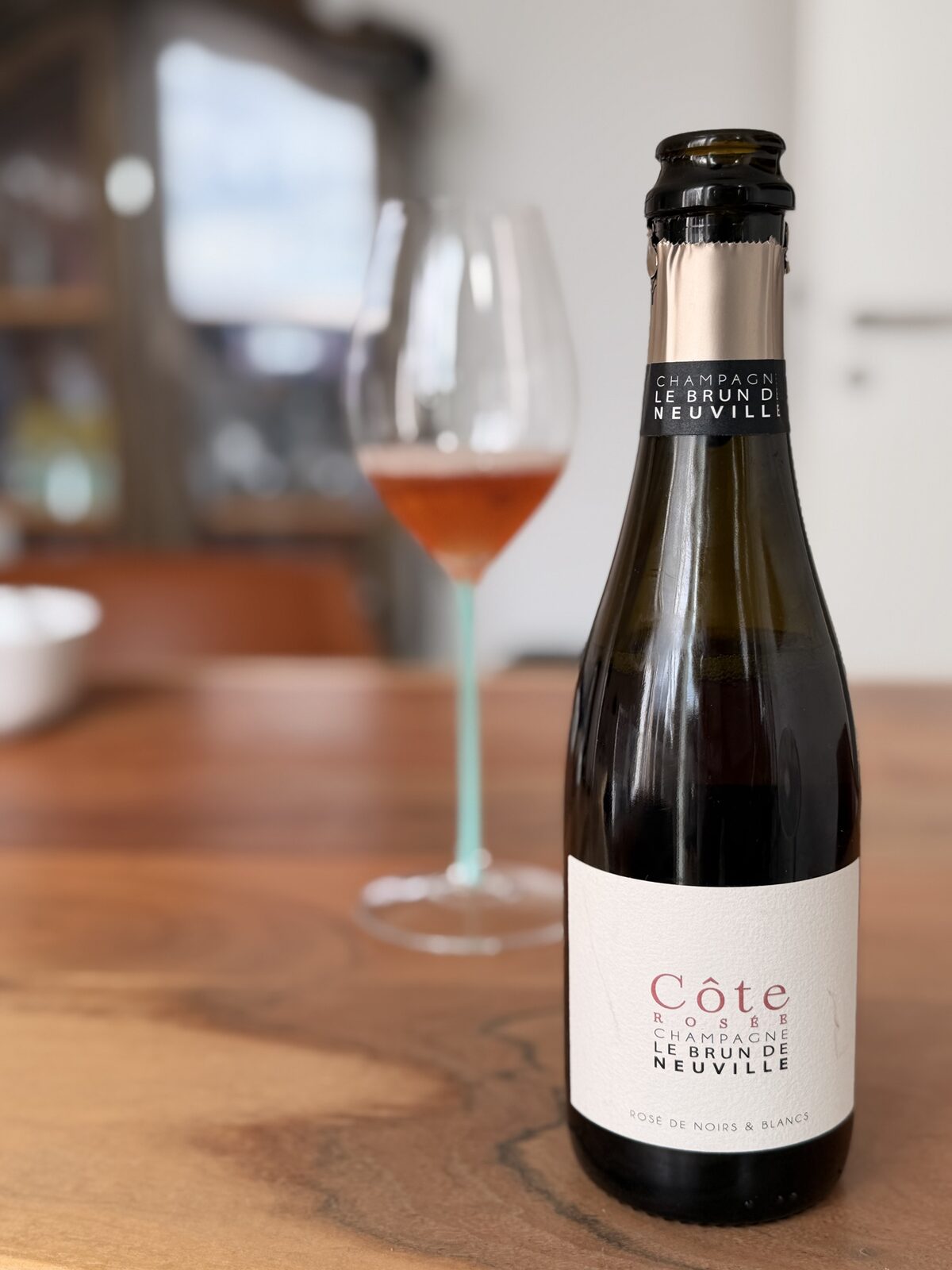
Le Brun de Neuville “Côte Rosée” again — same Rosé de Noirs & Blancs from the Bethon cooperative, this time in half-bottle (375 mL). Note 12 called the Burgundy bowl; this night pulled a Riedel Fatto a Mano Champagne with a turquoise Murano-style stem. The taller bowl keeps the Chardonnay line vertical and lets the Pinot Noir fruit sit on top of the salmon-pink core. A half-bottle rosé still refuses the flute.
#saynotoflutes